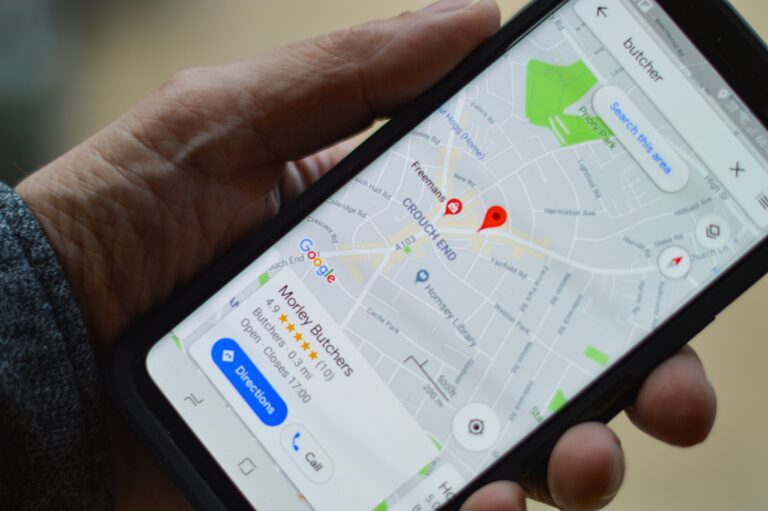

Google Maps SEO is the process of improving how your business appears in Google Maps and local Google Search results. For South African businesses, it can influence whether a nearby customer finds your profile, calls you, requests directions, visits your website or chooses a competitor instead.
Many business owners think Google Maps visibility is only about having a Google Business Profile. That profile is important, but it is only the starting point. Once the profile exists, Google still has to decide when to show it, where to show it, and whether it deserves to appear above similar businesses nearby.
This guide explains what Google Maps SEO means, how it works, what affects rankings, and where a local business should start when it wants better visibility on Google Maps.
What Does Google Maps SEO Mean?
Google Maps SEO means improving the signals that help Google understand, trust and display your business in local map results. It focuses on the local search experience, especially searches where customers are looking for a business near them or in a specific area.
Examples include searches such as plumber near me, dentist in Durbanville, accountant in Johannesburg, coffee shop close to me or emergency electrician Pretoria. In these searches, Google often shows a map pack or Google Maps results before, beside or above normal website listings.
The goal of Google Maps SEO is not to manipulate the map results. The goal is to make your business profile clearer, more complete, more trustworthy and more useful to customers so Google has stronger reasons to show it for relevant local searches.
Good map visibility usually starts with Google Business Profile optimisation, because your profile is the main asset Google uses inside Maps.
How Is Google Maps SEO Different From Traditional SEO?
Traditional SEO focuses mainly on improving website visibility in organic search results. Google Maps SEO focuses on improving local visibility through your Google Business Profile, map listing and related local signals.
They overlap, but they are not the same thing. A business can have a strong website and still struggle on Google Maps if its profile is incomplete, poorly categorised, short on reviews or inconsistent with other online information.
Here is a simple comparison:
Traditional SEO
- Main asset: Your website
- Primary goal: Rank pages in search results
- Key signals: Content, links, technical SEO and site authority
- Customer actions: Website visits, form fills and purchases
- Best for: Broader search demand
Google Maps SEO
- Main asset: Your Google Business Profile
- Primary goal: Appear in Maps and local pack results
- Key signals: Categories, proximity, reviews, profile quality and local consistency
- Customer actions: Calls, directions, website clicks, messages and bookings
- Best for: Local intent and nearby customers
For most local businesses, the two should work together. Your website helps explain your services in depth, while your Google Business Profile helps customers make quick local decisions.
Why Does Google Maps SEO Matter For South African Businesses?
For many SMEs, Google Maps is no longer just a directions tool. It is often the first place customers compare local providers. They look at reviews, opening hours, photos, services, distance, location, phone numbers and how trustworthy the listing feels.
We often see business owners focus heavily on their website while ignoring the profile that customers use when they are ready to take action. That can leave enquiries on the table, especially in competitive local markets.
Google Maps SEO matters because it can support:
- More calls from customers searching locally
- More requests for directions
- More website visits from high-intent local searches
- Better visibility for service and location-based searches
- More trust before a customer contacts the business
It is especially important for service businesses, professional practices, local branches, trades, medical practices, restaurants, retail stores and businesses that depend on nearby customers.
How Does Google Decide Which Businesses Appear On Google Maps?
Google does not publish a simple checklist that guarantees rankings, and no consultant should promise specific map positions. However, Google has made it clear that local results are influenced by relevance, distance and prominence.
In practical terms, Google is trying to answer three questions:
- Is this business relevant to what the searcher wants?
- Is this business close enough or connected to the searched area?
- Does this business appear trustworthy, established and useful compared with alternatives?
If your profile is vague, inconsistent or inactive, Google has weaker signals. If your profile is complete, accurate and supported by reviews, services, photos, website content and local consistency, Google has more to work with.
For a deeper look at the ranking side, it helps to understand how Google Business Profile rankings work and how map visibility is assessed.
What Are The Main Google Maps SEO Ranking Factors?
Google Maps SEO is not built on one single factor. It is a mix of profile quality, customer signals, local relevance and business trust.
Business Category
Your primary category is one of the strongest signals on your profile. It tells Google what type of business you are. If the category is too broad, inaccurate or chosen only for search volume, your profile may struggle to match the right searches.
Choose the category that best describes what the business is, not only what you want to rank for. Secondary categories can support related services, but the primary category should be accurate.
Business Information Accuracy
Your business name, address, phone number, website, opening hours and service areas should be consistent. Inconsistent information creates uncertainty for customers and for search engines.
This is particularly important for South African businesses that have moved premises, changed phone numbers, added branches or worked with multiple agencies over time.
Reviews And Review Quality
Reviews help customers decide whether to contact you. They can also support prominence and trust. It is not only about the number of reviews. Recency, rating, wording and how the business responds also matter.
A common mistake is asking for reviews only when rankings drop. Review generation should be part of normal customer service, not a panic tactic.
Services, Products And Descriptions
Your services and descriptions help Google and customers understand what you offer. A profile that simply says consultant, contractor or practice is usually less useful than one that clearly explains specific services.
Clear service information also helps customers qualify themselves before calling, which can improve enquiry quality.
Photos And Visual Trust
Photos make the business feel real. They can show premises, staff, products, vehicles, work examples, equipment or customer-facing spaces. For some industries, photos can be a strong trust signal because they reduce uncertainty.
Generic stock images rarely help as much as real business photos. Customers want to know who they are dealing with.
Website And Local Landing Pages
Your website still matters. Google can use it to understand your services, locations, expertise and business credibility. A thin website can limit the supporting context around your Google Business Profile.
When the website, profile and local content tell the same story, the business is easier to understand.
What Should You Optimise First?
Many businesses try to fix everything at once. That usually leads to rushed edits and inconsistent changes. A better approach is to start with the parts that affect clarity and trust.
Start with this order:
- Confirm the business name, category, address settings and phone number.
- Review service areas and location relevance.
- Add or improve services and business descriptions.
- Upload real photos that reflect the business.
- Build a steady review process.
- Check whether your website supports the same services and locations.
- Monitor calls, directions, website clicks and search queries.
The first priority is accuracy. The second is usefulness. The third is consistency. Those three principles keep the profile grounded and reduce the chance of messy optimisation work.
Common Google Maps SEO Mistakes
We have worked with businesses that had good services but weak map visibility because the basics were messy. Most problems are not dramatic. They are small issues that add up.
Common mistakes include:
- Using a keyword-stuffed business name
- Choosing the wrong primary category
- Displaying an address when customers do not visit that location
- Ignoring reviews or responding only to negative ones
- Using outdated opening hours
- Leaving services vague or incomplete
- Uploading no real photos
- Creating duplicate listings
- Expecting rankings to improve without ongoing activity
If your profile has visibility problems, it may help to review why your Google Business Profile is not ranking before making more edits.
Can Google Maps SEO Improve Rankings Quickly?
Sometimes improvements are visible quickly, especially when a profile has obvious gaps. For example, correcting an incorrect category, improving service information or fixing inconsistent details can make the profile easier for Google to understand.
But Google Maps SEO is not always instant. Competitive areas, review gaps, weak prominence, duplicate listings, poor website support and location factors can all slow progress.
No one can honestly guarantee a specific Google Maps ranking. What you can do is improve the quality, accuracy and trust signals around the profile so it has a stronger chance of performing for relevant searches.
That is also why comparing your profile to competitors can be useful. If you want to understand that gap, read about why competitors rank higher on Google Maps.
How Do You Measure Google Maps SEO?
Google Maps SEO should be measured by visibility and customer actions, not just a single ranking check from one device.
Useful indicators include:
- Profile views
- Search terms that trigger the profile
- Phone calls
- Direction requests
- Website clicks
- Messages or bookings, where enabled
- Review growth and review quality
- Visibility across priority service areas
Rank tracking can be helpful, but it should be interpreted carefully. Local rankings change based on searcher location, device, search wording, competition and timing.
For a more practical improvement path, see how to improve Google Business Profile rankings without relying on guesswork.
Where Does Google Maps SEO Fit Into Local SEO?
Google Maps SEO is one part of local SEO. Local SEO includes your website, Google Business Profile, reviews, local content, directories, local links and other location-based signals.
Your Google Business Profile is often the most visible local asset, but it should not work alone. A strong local SEO strategy connects the profile with a useful website, consistent business details and clear service/location content.
For local businesses, the best results usually come when the website and Google Business Profile support each other. The profile helps people act quickly, while the website gives them deeper reasons to trust and choose you.
FAQs
What is Google Maps SEO?
Google Maps SEO is the process of improving your business visibility in Google Maps and local Google Search results. It usually involves optimising your Google Business Profile, reviews, categories, services, photos, website signals and local consistency.
Is Google Maps SEO the same as Google Business Profile optimisation?
They are closely connected, but not exactly the same. Google Business Profile optimisation focuses on improving the profile itself. Google Maps SEO includes the profile plus other local signals that affect visibility in map results.
How long does Google Maps SEO take?
Some profile improvements can help quickly, but stronger local visibility usually takes ongoing work. Competition, location, reviews, website support and profile quality all influence the timeline.
Can any business rank on Google Maps?
Most legitimate local businesses can appear on Google Maps if they are eligible and correctly set up. Ranking well depends on relevance, distance, prominence, competition and the quality of local signals.
Do reviews help Google Maps SEO?
Yes. Reviews can help customers trust your business and may support local prominence. The quality, recency and consistency of reviews matter, along with how the business responds.
Do I need a website for Google Maps SEO?
You can have a Google Business Profile without a strong website, but a good website helps support your services, locations and credibility. For competitive markets, the website often plays an important supporting role.
Can I do Google Maps SEO myself?
Yes, many basics can be handled internally. The challenge is knowing what to prioritise, avoiding policy mistakes and understanding why competitors may still outrank you after the basics are complete.
Conclusion
Google Maps SEO is about making your business easier for Google and customers to understand, trust and choose in local searches. It starts with a properly optimised Google Business Profile, but it also depends on reviews, categories, services, photos, website support and consistent local information.
For South African businesses, this matters because many customers make fast decisions from Google Maps. They compare nearby providers, check reviews, look at photos, confirm hours and choose who to contact.
The strongest approach is practical and steady: fix the basics, improve the profile, support it with useful local content, and keep measuring the actions that matter.