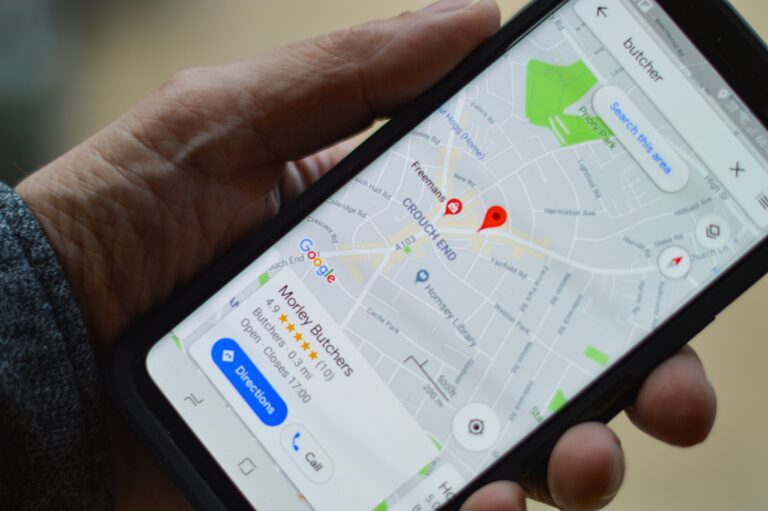

Few things are more frustrating than searching for your own services on Google Maps and finding several competitors listed ahead of your business.
You know you offer a great service. Your Google Business Profile is verified, your contact details are correct, and you’ve been operating successfully for years. Yet businesses with fewer years of experience—or even newer companies—appear above you in local search.
The reality is that Google Maps rankings are not based on business age alone. Google evaluates a wide range of signals to determine which businesses are most relevant, trustworthy and useful for each search.
Understanding why competitors rank higher on Google Maps can help you identify gaps in your own profile and create a strategy to improve your local visibility.
How Google Decides Which Businesses Appear First
Every Google Maps search is unique.
When someone searches for:
- Electrician near me
- Accountant Cape Town
- Dentist Sandton
- Plumber Johannesburg
Google analyses hundreds of signals before deciding which businesses appear first.
These signals revolve around three core principles:
- Relevance
- Distance
- Prominence
If you haven’t already, read our guide on How Google Business Profile Rankings Work to understand how these ranking principles influence local search results.
1. Your Competitors Have Better Relevance
Google wants to display businesses that best match the search.
Competitors often improve relevance by:
- Choosing accurate business categories
- Listing all their services
- Writing detailed business descriptions
- Keeping profile information complete
- Aligning their website content with their Google Business Profile
For example, a plumbing company that clearly lists “emergency plumbing”, “geyser repairs” and “drain cleaning” gives Google far more context than a business that simply describes itself as a plumbing contractor.
2. They Have More High-Quality Reviews
Reviews remain one of the strongest local trust signals.
Businesses that consistently receive genuine customer reviews often enjoy stronger prominence.
Google considers factors such as:
- Number of reviews
- Average rating
- Review recency
- Review quality
- Owner responses
One of the most common patterns we see is businesses asking for reviews only occasionally, while competitors request feedback consistently throughout the year.
3. Their Website Supports Their Google Business Profile
Your website and Google Business Profile work together.
Businesses that rank well often have websites with:
- Dedicated service pages
- Local SEO content
- Fast loading speeds
- Mobile-friendly design
- Clear business information
If your website provides very little information about the services you offer, Google has fewer signals to confirm your relevance.
4. They Keep Their Profile Active
Google prefers profiles that demonstrate ongoing activity.
Competitors may regularly:
- Upload new photos
- Publish Google Posts
- Update business information
- Add services
- Respond to reviews
An active profile sends stronger freshness signals than one that hasn’t been updated in months.
5. Their Business Has Greater Local Authority
Prominence extends beyond your Google Business Profile.
Businesses that rank well often have stronger local authority through:
- Local backlinks
- Industry citations
- Community involvement
- Media mentions
- Brand recognition
Google uses these signals to better understand which businesses are well-established within their local market.
6. They Generate More Customer Engagement
Google measures how customers interact with Business Profiles.
Although Google doesn’t disclose every engagement signal, businesses should monitor:
- Calls
- Website clicks
- Direction requests
- Messages
- Bookings
Profiles that encourage customer interaction often perform better over time.
7. Their Business Information Is More Consistent
Consistency builds trust.
Successful businesses maintain matching information across:
- Google Business Profile
- Website
- Online directories
- Social media platforms
Even minor inconsistencies in names, addresses or phone numbers can reduce Google’s confidence.
Common Mistakes That Allow Competitors to Overtake You
Many businesses lose visibility because they:
- Ignore profile updates
- Collect very few reviews
- Leave services incomplete
- Upload outdated photos
- Neglect their website
- Rarely respond to reviews
- Treat optimisation as a once-off task
These issues may seem minor individually, but together they weaken your overall ranking signals.
How to Catch Up to Your Competitors
The good news is that rankings can improve.
Start by:
- Completing every section of your profile
- Improving service information
- Building a consistent review strategy
- Updating photos regularly
- Strengthening your website’s local SEO
- Monitoring your Google Business Profile performance
- Reviewing competitor profiles for inspiration
You can also read our guide on How to Improve Google Business Profile Rankings for a practical optimisation checklist.
When Professional Optimisation Makes Sense
If competitors continue to outrank your business despite your efforts, it may be time for a deeper review.
Professional optimisation can help identify issues such as:
- Weak relevance signals
- Missed optimisation opportunities
- Website and profile misalignment
- Local SEO gaps
- Competitive disadvantages
Learn more about our Google Business Profile Optimisation service and how we help South African businesses improve their visibility in Google Search and Google Maps.
Final Thoughts
Competitors rarely rank higher by accident.
In most cases, they have built stronger relevance, prominence and trust signals over time through better optimisation, stronger reviews, consistent activity and a website that supports their Google Business Profile.
Rather than focusing on one quick fix, compare your profile objectively against the businesses appearing above you. Small improvements made consistently can significantly improve your local search visibility and help you compete more effectively on Google Maps.