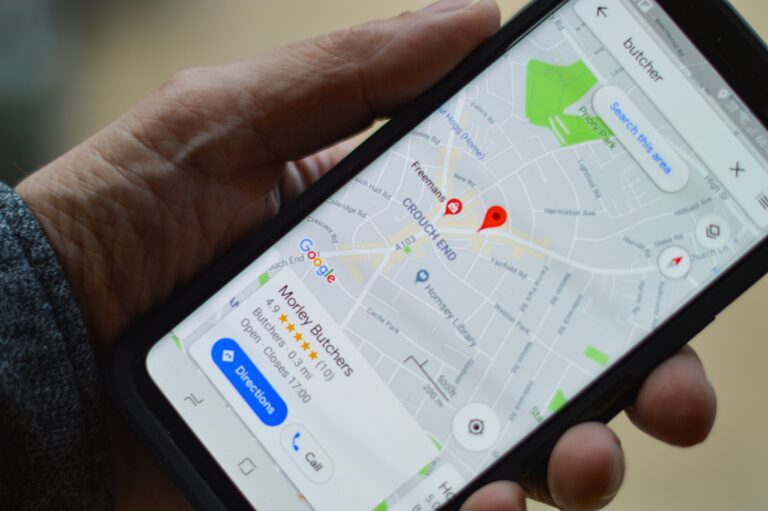

If you’ve ever wondered why one business consistently appears above another in Google Search or Google Maps, you’re not alone. Understanding Google Business Profile ranking factors is one of the most important steps towards improving your local visibility and attracting more customers.
Many business owners assume that simply creating and verifying a Google Business Profile is enough to secure good rankings. Unfortunately, that’s rarely the case. Google evaluates numerous signals before deciding which businesses deserve to appear in local search results.
The encouraging news is that while some ranking factors are outside your control, many can be strengthened through strategic optimisation.
In this guide, we’ll explain the most important Google Business Profile ranking factors, how they influence local search performance and where your business should focus its optimisation efforts.
What Are Google Business Profile Ranking Factors?
Google Business Profile ranking factors are the signals Google uses to determine which local businesses appear in Google Search and Google Maps.
Every time someone searches for a local service, Google evaluates businesses based on how likely they are to satisfy that search.
For example:
- Accountant near me
- Dentist in Cape Town
- Plumber Johannesburg
- Electrician Sandton
Rather than using one overall score, Google evaluates hundreds of signals that collectively determine where businesses appear.
Although Google doesn’t reveal every signal it uses, it publicly confirms that local rankings are primarily based on three core principles:
- Relevance
- Distance
- Prominence
Understanding these principles helps businesses prioritise the improvements that are most likely to influence rankings.
If you’re unfamiliar with how local rankings are calculated, we recommend first reading our guide on How Google Business Profile Rankings Work, which explains the ranking process before diving into the individual factors.
Google’s Three Core Local Ranking Factors
1. Relevance
Relevance measures how closely your business matches what someone is searching for.
Imagine someone searches for:
Emergency plumber near me
Google wants to display businesses that clearly provide emergency plumbing services—not simply any business related to construction or home repairs.
Google uses information from your profile to understand what your business actually does.
Strong relevance comes from:
- Accurate business categories
- Detailed service listings
- Helpful business descriptions
- Relevant website content
- Products where applicable
- Complete profile information
One of the most common optimisation mistakes we encounter is businesses being too generic.
For example:
“We provide quality services.”
This tells Google very little.
A much stronger description explains exactly:
- What services you provide
- Who you help
- Where you operate
- What makes your business different
The clearer your profile, the easier it becomes for Google to connect your business with relevant searches.
2. Distance
Distance refers to how close your business is to the person performing the search or to the location included in the search.
For example:
- Coffee shop near me
- Accountant in Durban
- Hairdresser Cape Town CBD
Distance is one ranking factor that businesses cannot directly optimise.
A business located in Pretoria cannot realistically expect to rank consistently for searches taking place in Durban.
However, distance doesn’t always determine the outcome.
Google may rank a slightly further business higher if it believes that business is significantly more relevant and prominent.
This is particularly important for service-area businesses that travel to customers.
3. Prominence
Prominence reflects how established, trusted and recognised your business appears.
Unlike distance, prominence can be strengthened over time.
Google may evaluate signals such as:
- Review quantity
- Review quality
- Review recency
- Website authority
- Brand mentions
- Local citations
- Online reputation
- Customer engagement
Businesses with stronger prominence often perform better because Google has greater confidence in recommending them.
Prominence is also one of the reasons long-established local businesses frequently outperform newer competitors.
Additional Factors That Influence Google Business Profile Rankings
Beyond Google’s three core principles, several optimisation signals support stronger local performance.
Although Google does not describe these as standalone ranking factors, they help Google understand and trust your business.
Profile Completeness
An incomplete profile limits the information available to Google.
Make sure your profile includes:
- Business description
- Services
- Contact details
- Website
- Business hours
- Attributes
- Photos
Complete profiles generally perform better than neglected profiles.
Review Quality
Reviews remain one of the strongest indicators of customer trust.
Google isn’t simply counting reviews.
It also considers:
- Review quality
- Review detail
- Recent reviews
- Overall sentiment
- Business responses
Detailed reviews that naturally mention services and customer experiences often provide stronger signals than short, generic reviews.
Website Quality
Your Google Business Profile does not exist independently of your website.
A well-optimised website helps reinforce:
- Business relevance
- Services
- Locations
- Authority
- Trust
Businesses with strong local SEO often have websites that clearly support their Google Business Profile.
Consistent Business Information
Your business details should remain consistent across:
- Google Business Profile
- Website
- Business directories
- Social media platforms
Consistency helps Google trust that your information is accurate.
Even small inconsistencies can reduce confidence.
High-Quality Photos
Photos improve customer confidence while providing Google with additional context.
Useful images include:
- Team members
- Premises
- Completed projects
- Products
- Service vehicles
- Before-and-after work
Businesses that regularly update photos often appear more active than businesses that upload images only once.
Google Posts
Google Posts allow businesses to publish updates directly to their profile.
Examples include:
- New services
- Promotions
- Company news
- Seasonal offers
- Helpful advice
Although Google Posts alone won’t dramatically improve rankings, they demonstrate ongoing activity and engagement.
Customer Engagement
Google measures how people interact with your Business Profile.
While Google doesn’t disclose every engagement signal, businesses should monitor:
- Calls
- Website clicks
- Direction requests
- Messages
- Bookings
Profiles that successfully attract customer interaction often provide stronger overall performance signals.
Ranking Factors Businesses Often Overestimate
Many business owners spend time focusing on activities that have little direct impact on rankings.
Myth 1: Google Ads Improve Organic Rankings
Running Google Ads does not directly improve your organic Google Business Profile rankings.
Paid advertising and local rankings operate independently.
Myth 2: Adding More Keywords Automatically Improves Rankings
Keyword stuffing your business description or services is unlikely to improve rankings.
Instead, focus on writing naturally while accurately describing your business.
Myth 3: Verification Guarantees High Rankings
Verification allows your profile to appear on Google.
It does not guarantee visibility.
Many verified businesses still struggle because they haven’t invested in optimisation.
Myth 4: Photos Alone Will Get You to the Top
Photos improve customer trust, but they work alongside dozens of other optimisation signals.
No single ranking factor determines success.
Which Ranking Factors Should You Prioritise?
Businesses often ask which factor matters most.
The reality is that optimisation works best when multiple signals improve together.
If you’re limited on time, prioritise:
- Profile accuracy
- Service relevance
- Review generation
- Website optimisation
- Consistent business information
- Ongoing profile activity
These improvements create a stronger overall profile rather than relying on a single tactic.
Can You Improve Every Ranking Factor?
Not entirely.
Some factors remain outside your control.
Difficult to Influence
- Searcher’s location
- Distance
- Competitor activity
Within Your Control
- Profile completeness
- Reviews
- Services
- Website quality
- Local SEO
- Photos
- Business information
- Profile maintenance
This is why businesses should focus on continuous improvement rather than chasing shortcuts.
How Ranking Factors Work Together
One of the biggest misconceptions is believing there is one “magic” ranking factor.
There isn’t.
Imagine two plumbing businesses.
Business A has:
- Excellent reviews
- Strong website
- Complete profile
- Regular updates
- Accurate services
Business B has:
- Few reviews
- Generic description
- Little profile activity
- Weak website
Neither business is perfect, but Business A sends consistently stronger signals across multiple ranking factors.
Google rewards that overall strength rather than one isolated improvement.
Why Ongoing Optimisation Matters
Google Business Profile optimisation isn’t something you complete once.
Customer expectations change.
Competitors improve.
Google updates its algorithms.
Your business evolves.
The businesses that maintain strong rankings are usually those that continue to improve their profiles over time.
If your profile has already been verified but isn’t delivering the visibility or enquiries you expected, ongoing Google Business Profile Optimisation can help identify weaknesses, strengthen ranking signals and improve your local search performance.
You may also find these guides useful:
- Why Your Google Business Profile Is Not Ranking – understand the most common reasons businesses struggle to appear in local search.
- Internal link: /blog/why-your-google-business-profile-is-not-ranking/
- How to Improve Google Business Profile Rankings – practical strategies to strengthen your visibility in Google Search and Maps.
- Internal link: /blog/how-to-improve-google-business-profile-rankings/
Final Thoughts
Google Business Profile ranking factors are designed to help Google recommend the most relevant, trustworthy and useful businesses to local customers.
While businesses cannot influence every factor, they have significant control over relevance and prominence through thoughtful optimisation.
Rather than looking for shortcuts, focus on creating a complete, accurate and customer-focused profile supported by a strong website, genuine reviews and consistent local SEO.
Businesses that continually improve these areas are far more likely to strengthen their rankings, increase visibility and generate more enquiries over the long term.